Background
The boundaries of India were never clearly defined. In ancient times, anything beyond Indus was India. Maurya and Gupta dynasties integrated the whole subcontinent into their empire and India arguably was at its peak in art and civilization. The arrival of Moghuls in medieval times meant new heights in culture and refinement at the cost of religious and ethnic intolerance. The fall of Moghuls in the late sixteenth and early seventeenth centuries meant disintegration of the empire into several smaller states. The European traders: Portuguese, French, British, Dutch and Danish seized the opportunities as well as they could. The British prevailed among them all with a handful of port enclaves coming under the possession of French and Portuguese. Dutch and Danish had little or no control around their trade ports and factories and they co-existed along with other traders. By the middle of the nineteenth century, half of the Indian peninsula was under British control and the other half consisted of princely-states. British diplomacy meant that these states were more or less suzerain-states of British Empire. Their loyalties and independence dependent on the treaties they underwent with them. Twentieth century saw a wave against colonialism around the world and struggle for independence in British Empire meant two independent states: India and Pakistan in 1947; divided on the lines of religion. Pakistan consisting of predominantly Muslim populace and India consisting of a majority of Hindu , a large but minority population of Muslims, and Sikhs, Jains, Buddhists, Parsis, Christians and several other ethnic and religious groups as minorities. At the time of independence, there were close to 570 existent princely states; in area as small as Vatican City to as large as France. The British had considerable suzerainty over around 200 of these states. These states were given the choice to either join India or Pakistan, chiefly in accordance with the religious considerations. They could even choose to remain independent of the two, if they desired so.
Chief Architects
Vallabhbhai Patel and his secretary VP Menon (a renowned civil servant) took the task of unification of India for the first time after centuries. It further helped that the nation had somewhat pro-Indian governor: Lord Mountbatten. Mountbatten used his influence on the princely states to coax them into joining India as most of such states would be politically and economically unsustainable due to geographical constraints. He also declared that the British Empire will not get into diplomatic relations with any such states and will not include them in Commonwealth, which meant no political recognization. Some states felt betrayed as they always had always considered the British to be their ally. Winston Churchill lamented Mountbatten and compared the acts of his and Congress to that of the Nazis. In the next two years, Patel and Menon flied all over the country nonstop and used every trick in the book to force the princely states into joining India. It further helped that most of these rulers were infamous for their brutality over their populace and their people saw a merger into India as a brighter promise. Some states voluntarily acceded, some were threatened, some were allowed to have their privy-purses and pensions. Some were provided more autonomy (which India could cease anyway later on). Contrary to Nehruvian philosophy of peaceful negotiations, for Patel, the means did not matter. Only the end did. The integration of India is arguably the finest example of diplomacy seen anywhere in the history of the world. The reason which lead to onset of British Empire in India, also lead to the fall of princely states into India: lack of unity among the states.
Rajputana States
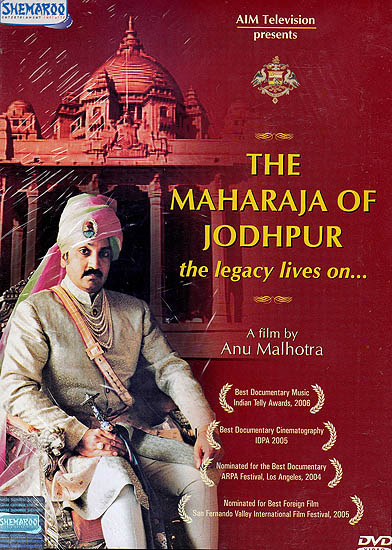
Jinnah was keen to attract the larger border states into Pakistan, chiefly: Jodhpur(Marwar) and Jaisalmer. He reportedly signed a blank white paper and cajoled the Maharaja of Jodhpur to sign accession at any conditions he desired and also promised him better terms of autonomy and lifestyle. Jinnah believed that these two border states could further set way to accession of other Rajputana states and this would compensate him for the loss of Punjab and Bengal. Mounbattern quickly pointed out that joining of majority Hindu states into Pakistan would undermine the existence of two state’s theory based on religion. The Maharaja of Jaisalmer further believed that this would be a betrayal to this populace and other Rajputana states will forgo ties with him. The young twenty-two year old Maharaja of Jodhpur, Hanwant Singh, desired his large state to remain autonomous or at least wanted to negotiate better terms so as to lead his lavish lifestyle. Patel made sure that Jodhpur did not become Hyderabad and a diplomatic mission led by Menon and Mountbatten forced Hanwant Singh to sign the treaty of accession. He wanted the imperialists to leave but he was fervently against the dhoti-clad Congressmen. He even tossed with the idea of asking the UN for help. Amid high drama, he signed the accession. The Viceroy left the room and Hanwant Singh was left alone with Menon. Frustrated, he took out his .22 barrel piston, pointed towards Menon and roared, “I refuse to take your dictation.” Added some words on his Surya clan ancestry (they claim to be descendants of Lord Ram) and threatened Menon of dire consequences if he ever betrayed his people. Menon, with his cool South Indian bureaucratic head is said to have replied, “If you think killing me or threatening to kill me will abrogate this treaty, you’re wrong.” Other than his eccentric manners, Hanwant Singh was highly regarded among his people. He personally went and asked all the Muslims in the walled city to stay rather than leave for Pakistan. “It will be my insult if you leave me.” he said. With all the atrocities and communal violence during partition, Jodhpur remained calm. He later somewhat audaciously (Nehru threatened to revoke the privy purses if princes entered politics) fought the first general election against the Congress in the state along with thirty-four of his supporters. Thirty one of them won and Congress leaders could hardly save their deposits. He died in a plane crash an eve before he could know of his victory.
States like Bikaner and Jaipur acceded on patriotic grounds voluntarily. Some entered into negotiations. Some like Tonk and Kishangarh were too small to resist. And in the “bulldozering” of Patel, all the close to twenty states of Rajputana acceded to India. Little did they know that reorganization of their states was to be followed. Rajputana was later reorganized as the Indian state of Rajasthan. In a matter of a couple of years, identity of all the Rajputana was lost. Indira Gandhi later in 1971 abolished all the privy-purses and pensions these rulers had negotiated.
Deccan States
Close to thirty small states in the southern presidency of Bombay. The reorganization meant that the southern states of Bombay went to Mysore (later renamed Karnataka). Bombay itself was divided into Maharastra and Gujrat.
Punjab States
Close to forty states in Panjab and Simla Presidency acceded either to India or Pakistan on the lines of religion.
Gwalior
Close to a dozen smaller states of Gwalior presidency had their treaties nullified with British Empire at the stroke of midnight 15Th Aug 1947. These were integrated into the Indians state of Madhya Bharat. (Later Madhya Pradesh) Some were integrated in Uttar Pradesh.
Central States
Chiefly consisting of Indore, Malwa, Bhopal, Bhopawar and others were integrated in the Indian state of Madhya Bharat.
Bhopal was one of the larger states wanting to remain independent on the pretext of maintaining its secularity. A little threatening diplomacy did the trick.
Eastern States
Popular national sentiments meant that provinces in modern day Orrisa and Bihar be merged with India. There were no major hindrances across these provinces.
North Eastern States
The issue of NEFA (North East Frontier Agency) was a complex one. Some of the states had completely different ethnicity and history and did not relate to India et all. Patel knew of the strategic importance of these regions. Modern Day Arunanchal Pradesh became part of British Empire according to Simla Accord 1913 between British, Tibet and China. A McMohan line was drawn along Indo-Sino border by a British Official Henry McMohan. China did not agree to the entire accord and left in between. It was completed between Tibet and British and modern day region of Arunanchal came under British and subsequently Indian control. The entire McMohan line is still a major bone of contention in Indo-Sino relations. China still claims Arunanchal to be part of southern Tibet. Naga tribes pressed for separate state of their own on basis of ethnicity. Army was sent to the region in 1955 and under negotiations, it became a Union Territory with reasonable autonomy. In 1963, it was granted a statehood.
The queen of Tripura under severe political pressure signed the merger on behalf of her teen child.
Manipur, despite establishing democracy, was controversially annexed in 1949.
Nepal, Sikkim and Bhutan
Nepal was recognized as an independent state by British Empire and was not merged. Bhutan was a protectorate state of British and a treaty with India meant that it became close to a suzerain state of India “abiding by the advice of India in external affairs”. In return, it was provided some of the controversial regions of Bengal.
Sikkim was given full internal autonomy with communications, external affairs and defense coming under India’s control (partial merger treaty). A referendum was conducted under Indian Army with 97% of the votes going in favor of integration with India and Sikkim became a state of India. The fairness of the referendum is often debated but it was a significant diplomatic achievement of Indira Gandhi’s governance.
Travancore
Travancore pointed out its thorium reserves to international community to gain recognition. But the ruler did not have support of his subjects. An attempt to assassinate his chief forced him to merger with India.
Junagarh
Junagarh in Gujrat was a small port province with a Muslim ruler but majority of Hindi subjects. It chose to accede to Pakistan defying Mountbatten on the grounds that it could be reached Pakistan mainland by sea-link. Patel had ancestral roots at the province. Also, the Hindu deity at Sarnath proved out to be more emotional and less rational reason in the mind of Patel. Forces were sent and the province and port was surrounded by the Indian troops. All supply and communications were annexed. The Nawab fled to Pakistan. A demand for plebiscite was raised in the UN but before the UN could take any diplomatic measures, a plebiscite was help under Indian control and 99% of the voters opted for integration to India. Pakistan accused India of breaking international laws and rigging the elections.
Hyderabad
The fanatic Nizam of Hyderabad wanted to remain independent. In spite of eighty percent of his subjects being Hindu, he resisted merger with India. He even sent diplomatic missions to Europe and got into agreement with Portuguese to either lend or sell port at Goa. He had slightly pro-Pakistan sentiments and donated the Pakistani government Rs 200 crore to overcome the financial crisis it was facing. (He was regarded as the richest person of his times) Patel sent troops to Hyderabad under Operation Polo and Hyderabad was annexed and merged in four days.
Kashmir
Out of all the princely states, Kashmir remains the most contentious region among India and Pakistan. It had a Muslim Majority but a Hindi oppressive king, Maharaja Hari Singh. Pakistan laid claim on Kashmir citing the majority of Muslim subjects. An ideal and peaceful negotiation would have been to divide the state into Kashmir, with majority of Muslim subjects going to Pakistan. Jammu, with majority of Hindu subjects along with Ladakh, with majority of Buddhists going to India. Nehru was a Kashmiri Pandit and his reasons to have Kashmir were slightly emotional. Hari Singh signed standstill agreements with India and Pakistan, and wanted to stay independent. Thus delaying the merger. Shortly after independence, Pathan tribesmen, supported by Pakistan Army crossed the border and rapidly marched towards Srinagar. Hari Singh asked for help and agreed to sign Instrument of Accession. Patel immediately wanted to send troops but was stopped by Nehru who insisted on having the document signed first to abide International Laws. After Hari Singh came to Delhi and signed the merger in presence of Nehru, Patel, and Mountbatten, all the private air carriers were called and troops were airlifted to Srinagar. Till then a major portion of North-West Kashmir (now PoK) was already occupied. India secured Jammu, Srinagar and some portions of valley but winter made sure that further movement was thwarted.
In a diplomatic faux, Nehru declared a ceasefire and took the issue to the UN. The UN recognized the Line of Actual Control and passed a resolution to hold a plebiscite in Kashmir. Both India and Pakistan refused take their troops back and the plebiscite was never held. Pakistan argued that a plebiscite be held solely in India Administered Kashmir. India now argues that subsequent successful elections in state have reinforced Kashmir’s integrity to India. Some fractions of Kashmir and Pakistan accuse India of rigging the state elections and employing puppet government in the state. Kashmir today, is one of the most disputed regions in the world.
Lakshadweep
The news of India’s independence was yet to reach these islands. Patel realized that Pakistan could lay claim on these islands as majority of its subjects were Muslims. He sent a ship under Indian Navy and Indian flag was raised there.
Andaman and Nicobar Islands
Some British officials wanted to retain these islands to use them as strategic air-bases. Others wanted to settle Anglo-Indians and Anglo-Burmese populace. Neither did Nehru care much about these inhabitable islands. Mounbattern ensured that these islands are merged as well with India according to the Treaty of Accession. The tribal leader of Nicobar, on request, agreed to sell his land in symbolic exchange of Nehru’s jacket to the amusement of all.
French India
The accession of French India was mostly peaceful and diplomatic. A plebiscite was held in Chandernagore in 1949 with majority supporting merger with India. Referendums were held in Yanam, Mahe, Pondicherry and Karikal in 1954 and all the four enclaves were acceded to India finally in year 1962.
Portuguese India
Portuguese did not respond well to diplomatic solutions and wished to maintain the enclaves under their possessions. Dadra and Nagar Haveli witnessed uprising in 1954 were annexed. Portuguese tried to send troops to Daman and Diu but were stopped by Indian Army. Diu had the longest rule of colonialism anywhere in the world for close to 450 years. Portuguese made several failed attempts to justify their possession of Goa at UN and International Court. Although Nehru favored peaceful negotiations, a revolt in 1961 forced the arrival of Indian troops and Goa was merged with India. Portuguese raised the issue in UN Security Council but were vetoed by USSR.
Awaiting Integration?
India claims complete control over Jammu and Kashmir. Present Line of Control divides the region into PoK, Indian Administered Kashmir and Aksai Chin (area acceded by Pakistan to China).
©Rakesh 2011